/cloudfront-us-east-1.images.arcpublishing.com/gray/SZZTW67LMRAMPPCKBBQMSUTFRA.JPEG?#)

















Engineering a Sustainable Tomorrow: Marc D Rappaport’s Vision for Solar Energy
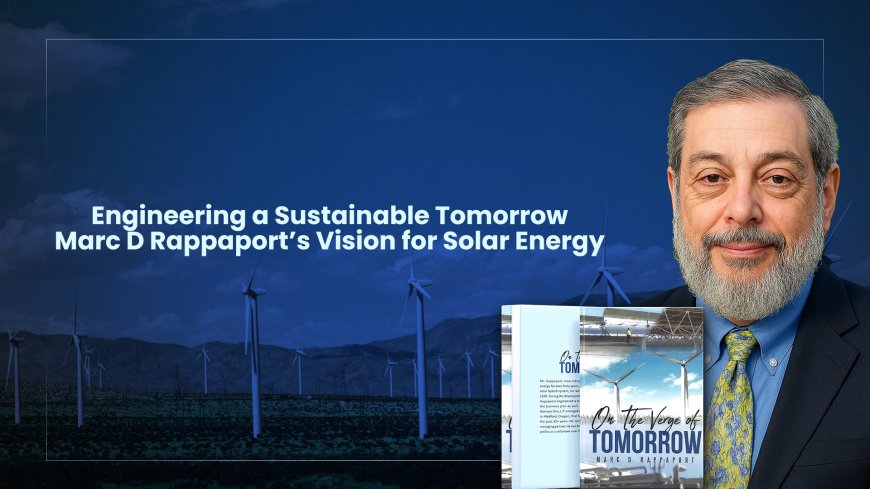
arc D Rappaport’s On the Verge of Tomorrow offers more than just an introduction to solar power—it is a call to rethink how society generates and consumes energy. As an engineer with a deep environmental commitment, Rappaport crafts a narrative that intertwines technology with urgency, offering readers a roadmap to a sustainable energy future.
The book stands out for its grounded approach. Instead of overwhelming readers with jargon or idealism, Rappaport breaks down solar energy’s principles with clarity and care. His explanations help demystify photovoltaic cells, energy storage, and grid integration, showing how these components work together to light up homes and power industries sustainably.
One of the book’s key strengths is its educational orientation. Marc Rappaport presents a variety of study materials designed to equip readers with knowledge that can spark personal or community action. Whether you’re a student, a homeowner, or simply a curious reader, the book’s insights encourage understanding and engagement.
Rappaport’s engineering perspective also highlights the practical realities of transitioning to solar energy. He discusses common challenges like initial costs, geographic limitations, and the intermittency of solar power, yet frames these hurdles as solvable through innovation and smart policy. By sharing real-world examples of solar projects and advances in technology, the book paints a hopeful picture of progress.
Importantly, the book underscores the environmental impact of continued reliance on fossil fuels. Rappaport contrasts wasteful energy habits with the clean, renewable promise of solar power, making a persuasive case for urgent change. His writing encourages readers to consider their own energy consumption and its broader consequences on the planet.
On the Verge of Tomorrow is more than a technical manual—it’s a manifesto for a better future. Marc D Rappaport’s voice carries the conviction that engineers, citizens, and policymakers must collaborate to turn solar energy from possibility into norm. The book invites everyone to see themselves as part of this vital transformation.